
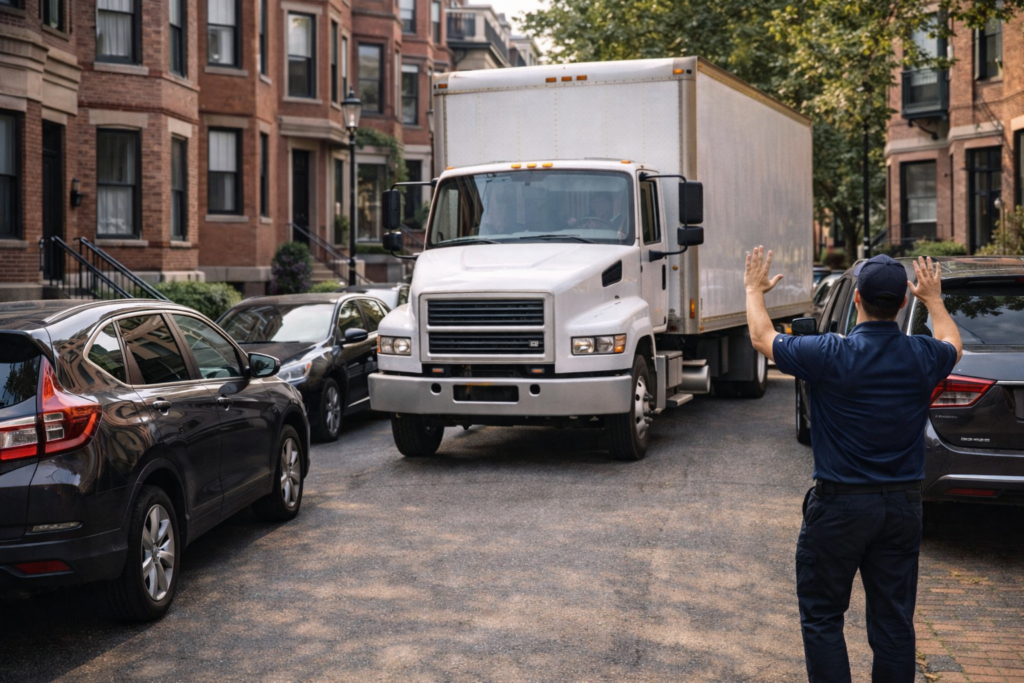
Moving within Boston can present challenges that have little to do with the distance between the old home and the new one. A relocation covering only a few miles can still require careful planning when narrow streets, limited parking, steep stairs, and older building layouts are involved.
These conditions are common across many of the city’s established neighborhoods. Brownstones, triple deckers, apartment buildings, and older homes were not necessarily designed around moving large modern furniture through their entrances, hallways, and staircases.
The surrounding streets can add another layer of complexity. A moving truck needs somewhere practical to load or unload, while traffic, parking restrictions, and limited curb space can affect how easily the crew can access the property.
Continental Moving considers these factors before moving day wherever possible. Understanding the origin and destination helps the team determine what access challenges may be involved and how those conditions could affect the equipment, vehicle, crew, and overall moving plan.
The objective is to identify potential problems before the truck arrives. With the right preparation, narrow streets and challenging building layouts become conditions that can be planned around rather than unexpected obstacles discovered halfway through the move.
Master Strategy for Boston Moving Logistics
Effective Boston moving logistics begin outside the property. Before furniture can be carried through the front door, the moving crew needs practical access between the building and the truck.
Parking is one of the first considerations. Depending on the location and circumstances of the move, appropriate parking arrangements or permits may need to be organized in advance. Establishing where the truck can legally and practically stop can reduce the distance movers need to carry belongings between the property and vehicle.
Street width also matters. Some residential roads provide relatively straightforward access for moving vehicles, while narrower streets can require additional consideration. Parked cars, corners, traffic, and other physical restrictions may all influence the most appropriate approach.
The same applies for Boston moving logistics at the destination. A move may begin at a property with easy truck access but finish at a building where parking is much more limited. Therefore, both addresses need to be considered when developing the plan.
Timing can also influence the move. Boston traffic conditions vary throughout the day, while local parking restrictions and other street activity can affect access around individual properties. Planning around known conditions can help reduce avoidable delays. It also gives the crew a clearer idea of how the move will progress before loading begins.
The distance between the truck and property is another practical consideration. If the vehicle cannot be positioned close to an entrance, movers may need to carry belongings farther along the sidewalk or through shared access areas. Looking at these factors together allows Continental Moving to prepare around the actual conditions of the relocation rather than assuming every Boston move can follow the same process.
Preparing the Crew and Equipment for City Access
The equipment required for a move can depend heavily on the conditions at the property. A straightforward ground floor relocation may require a different setup from a fourth floor apartment reached through a narrow staircase. Dollies, moving blankets, floor protection, straps, and other moving equipment can support the crew as belongings travel between the home and truck. Knowing about access restrictions in advance gives the team an opportunity to prepare the appropriate equipment before arriving.
Crew requirements may also be influenced by difficult property access. A property involving several flights of stairs and longer carries can create a different workload from a ground floor home with a driveway directly outside. This becomes especially relevant when the truck cannot be positioned close to the property. Longer carrying distances add another stage to each trip between the home and vehicle, making an organized loading process increasingly important.
Planning the sequence of the move can help maintain a steady workflow. Instead of moving belongings without considering what comes next, the crew can organize items around the property access, loading requirements, and conditions at the destination.
Preparation also gives customers an opportunity to identify unusual belongings before moving day. Particularly large furniture, substantial appliances, or other difficult items can influence the equipment and handling approach required. Providing this information early helps Continental Moving consider the complete moving route rather than discovering an unexpected challenge after work has already started.
Navigating Difficult Property Access and Tight Spaces
Once inside the property, the challenge shifts from street access to the physical layout of the building. Older homes and apartment buildings can contain narrow staircases, tight landings, low clearances, and sharp turns. Large sofas, bed frames, dressers, tables, and other substantial pieces may not move easily through these spaces in their assembled form.
Identifying difficult property access before moving day can make these situations easier to manage. Information about stairs, entrances, elevators, corridors, and particularly large furniture gives the moving team an opportunity to consider the route before attempting the carry.
Measurements can be particularly useful when clearance appears limited. Comparing furniture dimensions with doorways, staircases, and other potential restrictions can indicate whether an item is likely to fit or whether another approach should be considered.
Disassembly is one option for suitable furniture. Removing detachable legs, separating modular sections, or taking apart pieces designed for disassembly can make large items easier to maneuver through narrow areas. This can also reduce unnecessary contact with the surrounding property. Rather than attempting to force an oversized piece around a tight corner, reducing its dimensions may create the clearance needed for a more controlled carry.
Some moves can present more unusual access challenges. When a particularly large item cannot follow the normal route through a property, Continental Moving can assess whether an alternative handling method is appropriate based on the item, building, and conditions.
Protecting Both Properties Throughout the Move
Property protection becomes particularly important when space is limited. Narrow hallways and staircases naturally leave less clearance between furniture and surrounding surfaces, increasing the importance of preparation and controlled handling. Floor protection can be placed along appropriate moving routes, while other vulnerable surfaces can receive additional protection where required. Furniture itself can also be wrapped before being moved through confined areas.
Communication between crew members becomes especially important on staircases. The people carrying an item may not all have the same view of the route, particularly when navigating corners or moving between floors. Clear instructions allow the team to coordinate direction and positioning as the item moves through the building. A controlled pace also gives movers time to adjust when a turn or clearance is tighter than expected.
The same process continues at the destination. Furniture that successfully leaves one property still needs to travel through the entrances, hallways, and staircases of the new home. Planning both sides of the relocation helps prevent a situation where an item can be removed successfully but proves much more difficult to place at the destination.
Boston’s combination of dense streets and older properties means local moves can require considerably more preparation than their mileage might suggest. A short journey across the city can still involve parking arrangements, long carries, several flights of stairs, and challenging furniture maneuvers.
Solid planning brings those individual considerations together. Understanding truck access, parking conditions, building layouts, furniture dimensions, and equipment requirements gives the moving team a clearer picture of the job before work begins.
It also gives the customer an opportunity to raise potential challenges early. Mentioning a narrow staircase, difficult entrance, unusually large piece of furniture, or restricted parking during the planning process allows Continental Moving to consider those details when preparing for the move.
The goal is not to eliminate every challenge. Boston properties will still have tight stairs, narrow streets, and limited parking. The difference comes from knowing about those conditions and arriving with a plan for managing them. If you are preparing for an upcoming Boston relocation and your property presents challenging access conditions, Contact Us today to discuss the details and start planning your move with Continental Moving.
