

Damage to household goods is consistently among the top categories of complaints filed against interstate movers, according to the FMCSA National Consumer Complaint Database. In a city like Boston, where third-floor walk-ups, narrow stairwells, and the September 1 rush turn moving days into a logistical scramble, that risk climbs sharply for anyone who packs in a hurry. The good news: most damage comes from a small set of preventable mistakes, not bad luck.
This guide walks you through how to pack fragile items for moving in Boston, room by room, with real material costs, professional techniques, and Boston-specific advice for triple-deckers, brownstones, and high-rise apartments. Whether you are handling a Back Bay studio or relocating an art collection out of Brookline, the principles below give you the same protection professional packers use on every job.
Why Fragile Items Break During Boston Moves
Three forces cause most damage in transit: impact, vibration, and pressure. A single pothole on Storrow Drive or Mass Ave can shift a poorly packed box several inches inside the truck. Multiply that by 30 minutes of city driving and items rub, tip, or crack against each other.
Boston adds a few unique stressors:
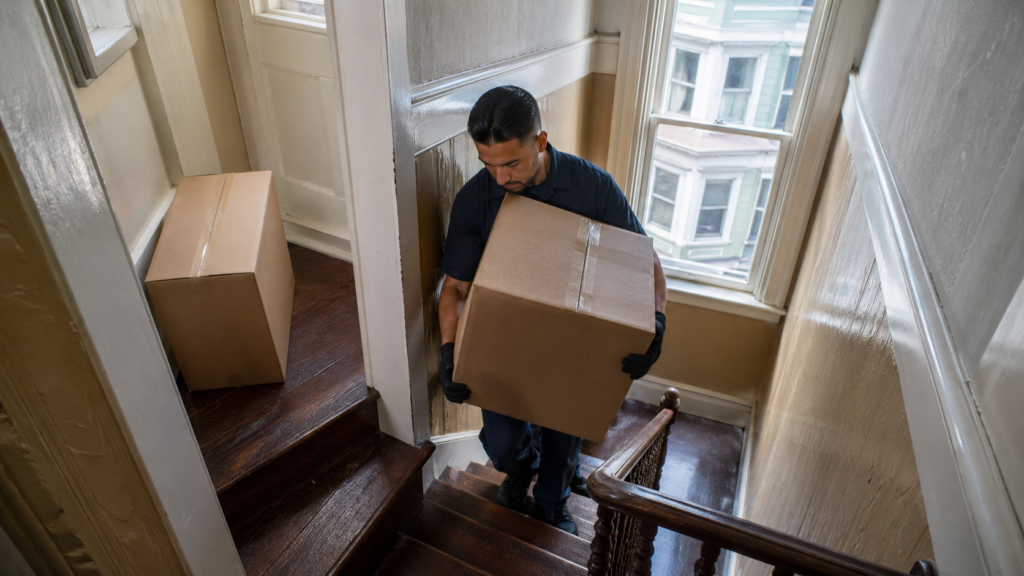
- Triple-decker stairs mean every box gets carried up two or three flights, often through a narrow stairwell that forces sharp turns.
- Tight parking can put the truck a full block from your door, increasing carry distance and handling time.
- Temperature swings between a heated apartment and a cold truck (or hot truck in summer) stress wood, electronics, and oil paintings.
- Old building doorframes in places like Beacon Hill or the North End rarely match modern furniture sizes, raising the chance of bumps and scrapes.
Knowing these factors helps you decide what gets extra protection, what gets professional handling, and what travels with you in the car.
Packing Materials: What You Need and What It Costs
For a typical Boston one-bedroom, expect to spend $150 to $300 on supplies if you pack yourself. Larger homes commonly run $300 to $500 in materials alone. Here is what to budget for.
Essential Packing Supplies and Boston-Area Prices
| Material | Typical Use | Average Cost (2026) |
|---|---|---|
| Bubble wrap, small roll (12″ x 30 ft) | Glassware, electronics | $10 to $15 |
| Bubble wrap, large roll | Mirrors, art, TVs | $30 to $40 |
| Packing paper (10 lb bundle) | Dishes, gap fill | $20 to $25 |
| Dish pack box (double-walled) | Plates, stemware | $8 to $15 |
| Mirror or picture box (telescoping) | Mirrors, framed art | $20 to $40 |
| TV box with foam inserts | Flat-screen TVs | $25 to $50 |
| Packing peanuts (14 cu ft) | Void fill | $15 to $25 |
| Foam pouches (50 pack) | Stemware, electronics | $10 to $15 |
| Heavy-duty packing tape (6 pack) | Box sealing | $15 to $20 |
| Stretch wrap | Bundling, surface protection | $10 to $15 |
| Fragile labels (50 pack) | Box identification | $5 to $10 |
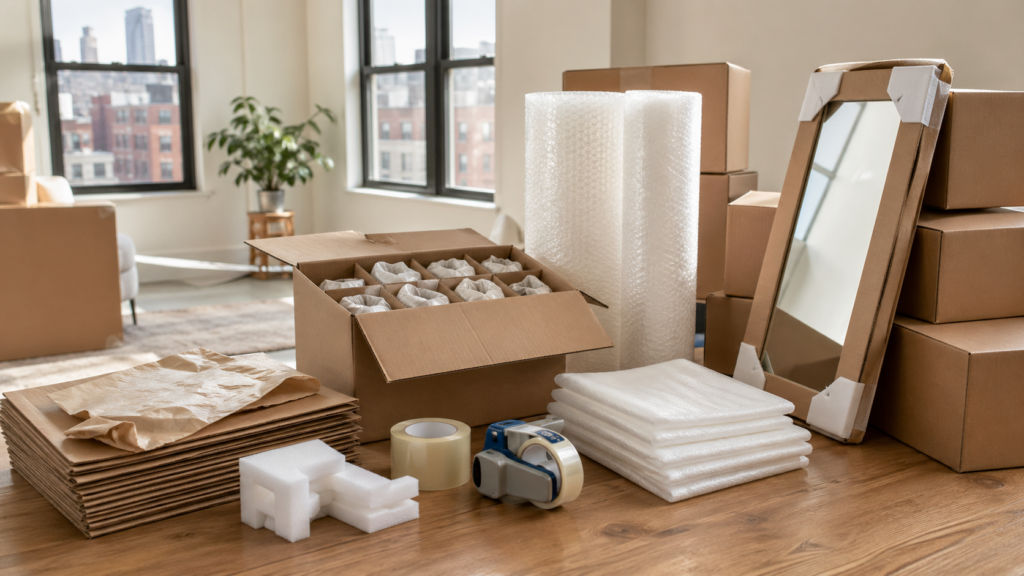
Where to buy in Boston: U-Haul stores in Allston, Dorchester, and Cambridge, Home Depot, and most Boston-based moving companies will sell supplies directly. Buying through a mover often costs 10 to 20 percent more, but it eliminates trips to multiple stores.
One Rule That Saves the Most Money
Never use newspaper as packing paper. The ink transfers to glass, ceramics, and especially white porcelain. The cost of replacing a stained set of dishes erases any savings from skipping the $20 packing paper bundle.
How to Pack Glassware and Dishes
Drinking glasses are the most commonly broken item during residential moves. Plates rank a close second. Both fail for the same reason: people pack them flat and tightly stacked, which concentrates pressure on the weakest point of each piece.
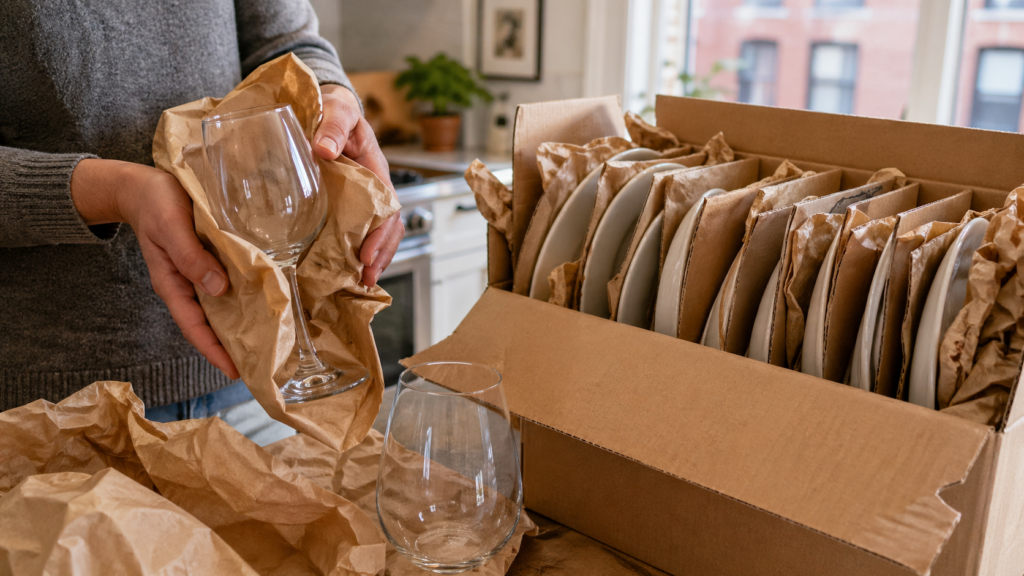
Step-by-Step for Glassware
- Use a dish pack box, not a standard moving box. Dish packs have double walls and are sized to limit shifting.
- Line the bottom with two inches of crumpled packing paper.
- Wrap each glass individually. For stemware, stuff paper inside the bowl first, then wrap the stem and bowl together.
- Stand glasses upright, not on their sides. The base is the strongest part of the glass.
- Add a paper layer between rows if stacking. Limit to two rows for stemware.
- Fill all gaps with crumpled paper. Shake the box gently. If anything moves, add more padding.
- Tape with the H method: down the center seam and along both edge seams, top and bottom.
Step-by-Step for Plates
- Wrap each plate in two sheets of packing paper.
- Stand plates on edge, like vinyl records. This is the single most important rule for dishes. Plates packed flat crack under the weight of the stack above.
- Group three to four plates with paper between each, then wrap the bundle together.
- Place the heaviest plates at the bottom of the dish pack, lighter saucers on top.
- Limit each box to 35 pounds. Anyone carrying it up three flights of stairs will thank you.
For more detailed apartment packing tips relevant to triple-deckers and walk-ups, our apartment moving guide covers stair logistics in depth.
How to Pack Mirrors and Picture Frames
Mirrors and framed art shatter from two things: flexing across the diagonal during transport, and direct impact on the glass surface.
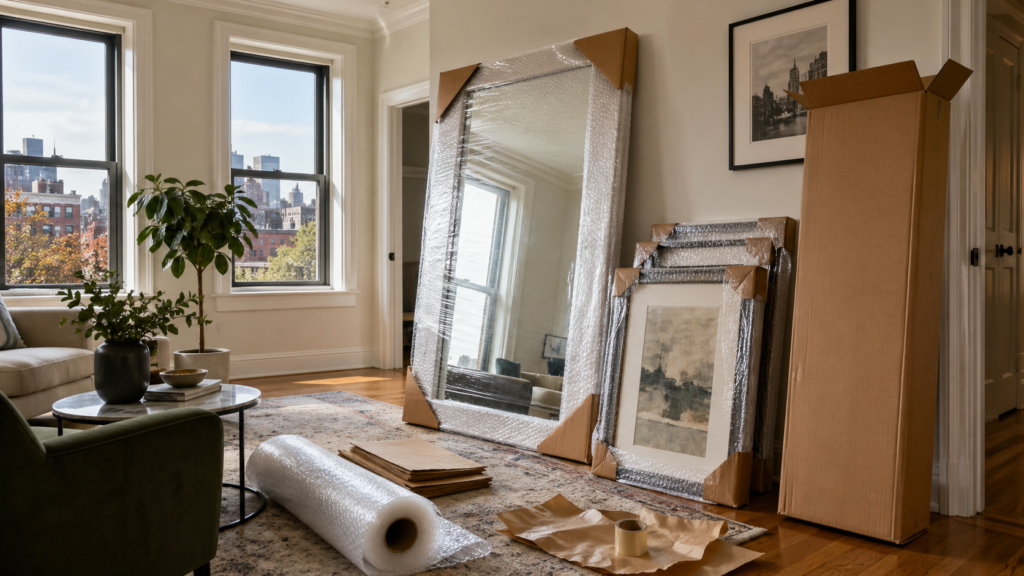
Mirror Packing Steps
- Apply painter’s tape in a large X across the glass surface. This does not prevent breakage, but it holds shards together if the glass cracks, preventing damage to the frame and other items in the box.
- Wrap the entire mirror in a layer of packing paper, then a layer of bubble wrap with the bubbles facing in.
- Reinforce corners with cardboard corner protectors. The corners are where most cracks start during a move.
- Use a telescoping mirror box. These adjust to fit any size frame. Pad the inside with crumpled paper before sealing.
- Always transport upright, never flat. Mirrors loaded flat pick up the full weight of anything stacked on them.
- Label both sides with “Fragile, This Side Up” and directional arrows.
Picture Frames and Wall Art
Small frames can travel together in a dish pack, each wrapped individually and stood vertically with paper between them. For frames over 24 inches, use a picture box and treat them with the same care as a mirror.
How to Pack Art for Moving
Original paintings, prints, and sculptures need different protection than mass-produced decor. Damage to original art is rarely fully covered by standard moving insurance, which under federal Released Value Protection pays only $0.60 per pound (per FMCSA guidelines). A 5-pound oil painting valued at $5,000 would receive just $3 in compensation under that default coverage.
Paintings and Framed Originals
- Cover the surface of the painting with acid-free glassine paper. This prevents oils, varnish, or pigment from sticking to wrapping material.
- Wrap in bubble wrap with the bubbles facing out, away from the painted surface.
- Build a cardboard sandwich around large pieces using two flat sheets cut to size, taped securely on all edges.
- Use a dedicated art box or custom crate for items valued over $1,000. Many Boston movers offer custom crating as an add-on service.
- Maintain temperature stability. Avoid leaving wrapped art in an unheated truck for hours during a Boston winter move. Sudden temperature changes can cause canvas and varnish to crack.
Sculptures and Three-Dimensional Pieces
Pad the base, wrap protrusions individually, and use a custom-cut foam insert or double-boxing technique. For valuable sculptures, consider Full Value Protection insurance, which costs roughly 1 to 2 percent of declared shipment value but compensates the full replacement amount in the event of damage.
How to Pack Electronics for Moving
TVs, computers, gaming consoles, and audio equipment account for some of the most expensive damage claims after a move. They fail from impact, internal component shifting, and condensation when temperature changes are sudden.
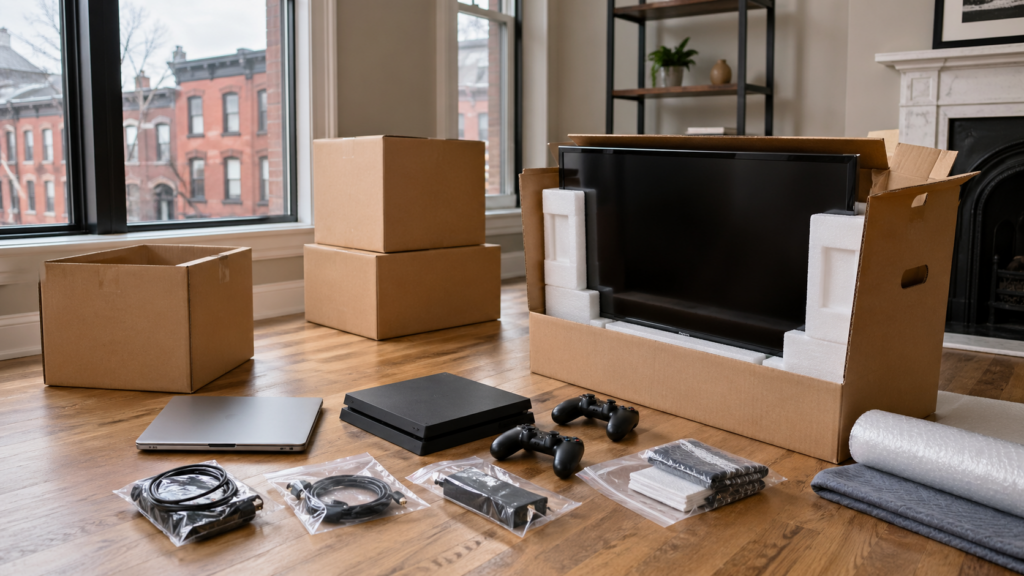
TVs and Monitors
- Use the original box if you saved it. This is the best protection by a wide margin.
- If you do not have it, buy a TV-specific moving box with foam inserts, $25 to $50 in the Boston area.
- Cover the screen with a soft cloth or anti-static foam sheet before wrapping. Avoid pressure on the screen itself.
- Wrap with a double layer of bubble wrap.
- Transport upright, never flat. Flat-screens have internal panels that crack under their own weight when laid down.
- Label clearly with “Fragile, This Side Up, Electronics” on multiple sides.
Computers, Consoles, and Audio Equipment
- Back up data before disconnecting any computer or external drive.
- Photograph cable arrangements before unplugging. This saves hours during setup at the new place.
- Remove discs, cartridges, and batteries from consoles and remotes. Batteries can leak under temperature changes.
- Wrap each device individually in bubble wrap or a soft cloth.
- Use original boxes when possible. Otherwise, pack snugly with foam padding on all sides in a sturdy double-walled box.
- Allow 24 hours before powering on after a move, especially in winter. Electronics moved from a warm building into a cold truck and back can develop internal condensation. Powering them on too early can short circuits.
Boston-Specific Packing Considerations
Climate and Seasonal Timing
Boston winters can drop below freezing inside a moving truck. Vinyl records, oil paintings, wooden instruments, and electronics all suffer in extreme cold. Plan winter moves with the most fragile items going in heated vehicles, not the truck.
Summer heat is equally rough. Candles melt, electronics overheat, and pressed wood furniture warps. Pack heat-sensitive items last so they spend the least amount of time in the truck.
Stairs and Long Carries
Boston’s classic triple-deckers and brownstones add 30 to 60 minutes per move just for stair carries. Pack fragile boxes lighter than non-fragile ones. A 35-pound dish pack is much safer to carry up three flights than a 50-pound box of books.
Parking and Permits
If your truck cannot park within 50 feet of the entrance, fragile boxes are exposed to longer carry times and more handling. Reserve a parking spot through the City of Boston Transportation Department permit system at least 48 hours in advance. This single step prevents most last-minute scrambles. For more on local logistics, see our local Boston movers guide.
DIY Packing vs Professional Packing in Boston
Hiring professional packing services in Boston typically costs $90 to $180 per hour for a two-person crew, plus materials. According to industry data published by Angi, professional packing services cost between $280 and $2,200, with an average around $1,000 depending on home size and number of belongings. National benchmarks place average professional packing at $67 to $120 per hour, so Boston runs slightly above the national mean due to higher labor costs in the metro area.
When DIY Packing Makes Sense
- You have at least three weeks of lead time before move day.
- Most of your belongings are non-fragile (books, clothing, basic kitchenware).
- You are moving locally and not crossing state lines.
- You are comfortable researching techniques and willing to make multiple supply runs.
When Professional Packing Is Worth It
- You own original art, antiques, or high-value electronics.
- You are moving long distance, where shipment time and vibration multiply damage risk.
- You are working full time during the week before the move.
- You are moving from or into a building with strict elevator windows or move-in time slots.
Professional packers often complete in four to six hours what takes a homeowner four to six days. They also bring liability coverage that DIY packing does not include. If anything packed by movers breaks in transit, the moving company assumes responsibility under the contract terms. Items packed by the customer fall under more limited coverage. For this reason, most Boston professional packing services offer full, partial, and fragile-only options to match different budgets and risk tolerances.
A Note from the Field
“After hundreds of moves across Boston neighborhoods, the pattern is consistent: the items most often damaged are not the ones people forgot, but the ones they assumed would be fine. A flat-screen TV laid horizontally on a couch, a mirror packed without corner protection, dishes stacked face-down to save space. Five extra minutes of correct packing per item prevents almost every claim we see,” says Cristian Daringa, co-founder of Continental Moving Company.
Frequently Asked Questions
How much does it cost to have professional packers in Boston?
In the Boston area, professional packing typically costs $90 to $180 per hour for a two-person crew, plus materials. A one-bedroom apartment runs around $300 to $450 in labor and $100 to $150 in supplies. Larger two- and three-bedroom homes can cost $1,000 to $1,800 total when factoring in materials and crew time.
How long does it take to pack a Boston apartment for moving?
A two-person professional crew typically packs a one-bedroom apartment in four to six hours. A two-bedroom takes seven to nine hours, and a three-bedroom home commonly runs eight to twelve hours. DIY timelines extend roughly four to six times longer because of decision fatigue and supply runs.
Are my fragile items insured during a Boston move?
By default, federally regulated moves are covered under Released Value Protection at $0.60 per pound, which is minimal. Full Value Protection costs roughly 1 to 2 percent of the declared shipment value and pays full replacement cost on damaged items. For valuable art, electronics, or antiques, Full Value Protection is strongly recommended.
What is the most commonly broken item during a move?
Drinking glasses rank first, followed by plates, mirrors and picture frames, lamps, and flat-screen TVs. Damage to household goods is one of the most common categories of consumer complaints recorded in the FMCSA National Consumer Complaint Database, with poor packing technique consistently cited as the leading cause.
Can I pack fragile items myself and have movers transport them?
Yes, this is common in Boston. Keep in mind that items packed by you are typically excluded from full damage liability. If a self-packed box breaks, recovery is limited to basic released-value coverage. Movers will still transport and load the boxes, but documentation of pre-existing condition matters if a claim arises.
How early should I start packing for a Boston move?
For a one-bedroom, start two to three weeks before move day. For a two- or three-bedroom home, plan on four to six weeks. The September 1 rush in Boston means moving companies, supply stores, and parking permits all have limited availability in late August. Booking and supply runs four weeks out is the safest timeline.
Do I need to remove TV mounts and brackets before the movers arrive?
Yes. Most moving companies do not handle wall-mount disassembly unless specifically arranged in advance. Removing the TV from its mount, wrapping it, and placing it in a TV box before move day saves time and reduces handling damage during the move.
Plan Your Boston Move with Confidence
Packing fragile items well comes down to three habits: invest in proper materials, wrap individually with adequate padding, and never load mirrors or flat-screen TVs flat. Whether you tackle the job yourself or work with experienced Boston packers, those three rules prevent the bulk of common damage.
Need a hand for part or all of your packing? Request a free, no-obligation moving quote from Continental Moving and a member of our team will walk through your inventory, building access, and timeline to map out the safest path for your fragile items.
