
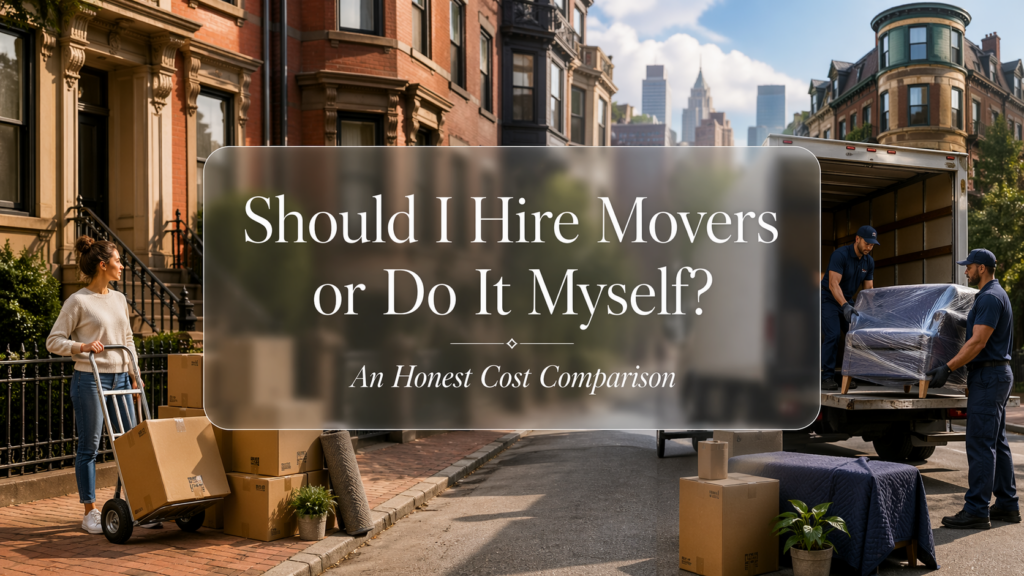
If you are weighing hire movers vs DIY for a Boston move, the honest answer is this: neither option is automatically cheaper. DIY looks cheap on paper and gets expensive in practice. Professional movers look expensive on paper and often cost less than people expect once you account for every real-world line item.
This guide breaks down the actual numbers for both paths, shows you when each makes sense, and helps you make a call you will not regret at 9pm on moving day.
Quick Summary
- A DIY studio move in Boston typically lands around $450 to $750 all-in once you count truck rental, gas, supplies, insurance, food for helpers, and a lost day of work.
- Hiring professional movers for the same studio runs $280 to $540, with a crew, truck, equipment, wrapping materials, and basic coverage included.
- The cost gap is smaller than most people think. The real question is not “which is cheaper,” but “which is cheaper for my specific apartment, timeline, and inventory.”
- DIY wins when the move is small, single-level, and you have genuinely reliable help.
- Movers win when you have stairs, heavy furniture, a tight schedule, fragile items, or no one to call at 7am on Saturday.
The Real Cost of a DIY Move in Boston
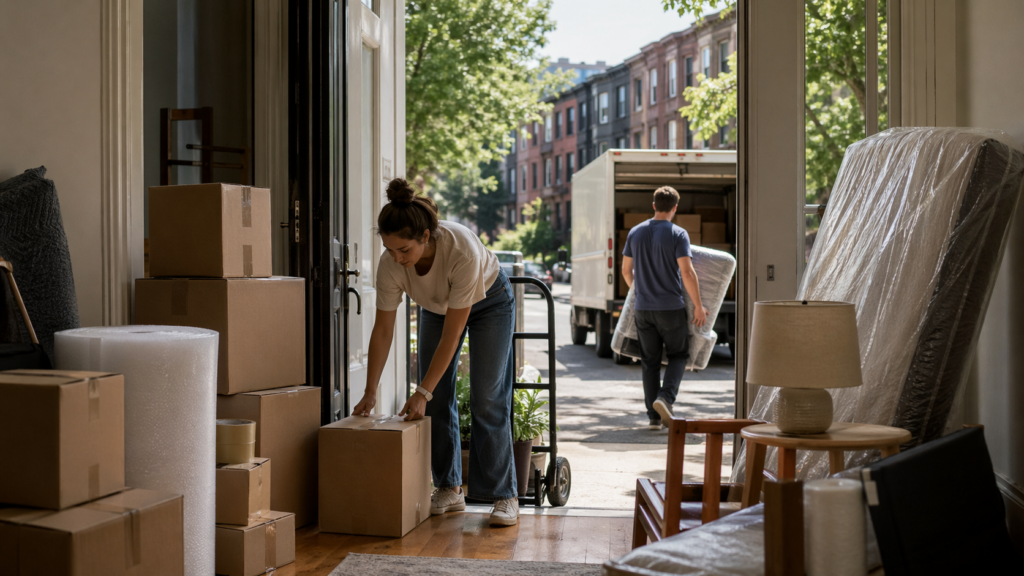
Most DIY cost estimates stop at the truck rental. That is why people who move themselves are often surprised by the total. Here is what a realistic full-day studio or small one-bedroom DIY move actually looks like in the Greater Boston area.
Truck rental: $100 to $250
U-Haul’s base rate for a 10-foot or 15-foot truck runs roughly $19.95 to $39.95 per day, plus $0.99 to $1.39 per mile. For a typical in-town Boston move of 20 to 40 miles, that is about $100 to $200 before taxes and fees. Add the damage waiver ($15 to $30), environmental fees, and a dolly rental, and the truck alone quickly hits $150 to $250.
Gas: $50 to $100
Rental trucks average only 10 to 12 MPG. Between pickup, loading, driving, unloading, and the return trip, most in-town moves burn 8 to 15 gallons of fuel.
Moving supplies: $60 to $150
Boxes, packing tape, bubble wrap, stretch film, mattress covers, and furniture pads. Free Craigslist boxes help, but new materials for a studio still run $60 to $100, and a one-bedroom easily hits $150.
Food and beverages for helpers: $40 to $100
If friends are helping, pizza, coffee, and drinks are the minimum social contract. Plan on $15 to $25 per helper.
Lost wages or time off work: $150 to $400
Most DIY moves take 6 to 10 hours including truck pickup and return. If you have paid time off, it does not feel like a direct cost. If you are hourly, self-employed, or salaried with limited PTO, it is very real money. At even $20 per hour, a lost day is $160.
Risk of damage or injury
This one is harder to put a number on, but it is not zero. The U.S. Bureau of Labor Statistics lists overexertion in lifting and lowering as one of the top causes of non-fatal workplace injuries, with sprains and strains dominating the list. A pulled back during a move can cost hundreds to thousands in medical bills and missed work.
Realistic DIY total for a Boston studio: $450 to $750. For a one-bedroom, scale up the truck size, supplies, and hours, and expect $600 to $1,100.
The Real Cost of Hiring Professional Movers in Boston
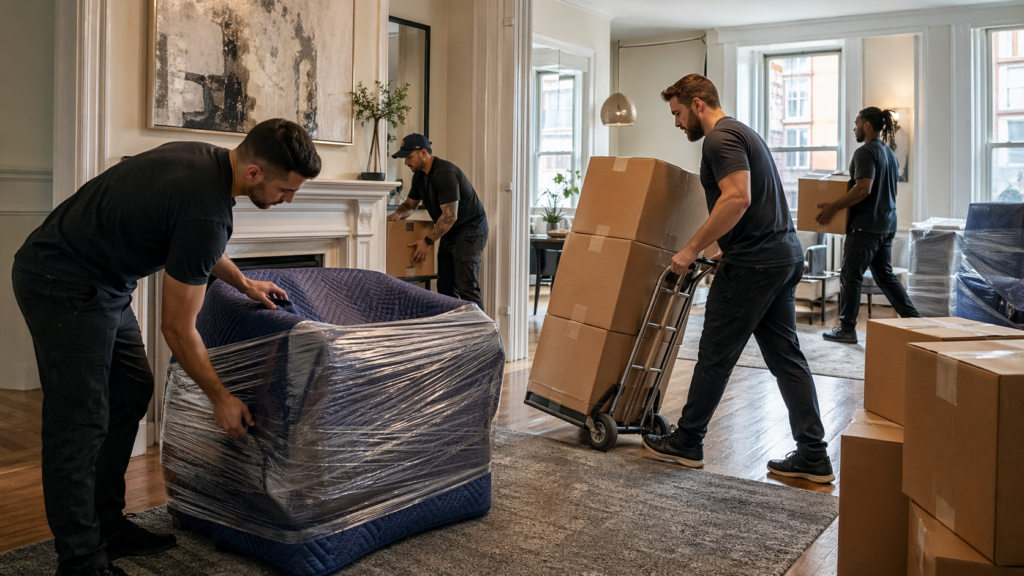
Professional moving rates in Boston are usually hourly, with a 2 to 3 hour minimum. Most local crews charge $100 to $180 per hour for a two or three-person team, with larger crews at $180 to $250 per hour. That rate typically includes the truck, fuel, basic equipment, wrapping supplies, and released value protection.
Here is how those rates translate by home size:
| Home Size | Typical Crew | Typical Duration | Typical Total |
|---|---|---|---|
| Studio | 2 movers | 2 to 3 hours | $280 to $540 |
| Small 1-bedroom | 2 movers | 3 to 4 hours | $400 to $720 |
| Large 1-bedroom | 2 to 3 movers | 4 to 5 hours | $560 to $900 |
| 2-bedroom apartment | 3 movers | 5 to 7 hours | $750 to $1,400 |
| 3-bedroom home | 3 to 4 movers | 7 to 9 hours | $1,100 to $2,200 |
These are general Boston-area ranges, not binding quotes. Peak dates (weekends, end of month, and especially September 1) sit at the higher end. Midweek moves in the middle of the month often sit at the lower end.
For smaller jobs, you can also hire just the labor and skip the truck. The moving labor only in Boston guide breaks down how that pricing works when you already have a rental truck or portable container.
Head to Head: DIY vs Hiring Movers in Boston
| Factor | DIY Move | Professional Movers |
|---|---|---|
| Cash cost (studio) | $450 to $750 | $280 to $540 |
| Cash cost (1-bedroom) | $600 to $1,100 | $400 to $720 |
| Time required | 6 to 10 hours | 2 to 5 hours |
| Physical labor | All of it | None |
| Risk of damage | Higher | Lower (trained, insured crew) |
| Risk of injury | Higher | None to you |
| Driving a truck in Boston | Your problem | Their problem |
| Parking, stairs, tight doorways | Your problem | Their specialty |
| Insurance on items | Usually none | Basic released value included |
| Flexibility | Full control of timing | Scheduled window |
Side by side, DIY is only clearly cheaper when the job is very small and very simple.

When DIY Actually Makes Sense
DIY is a legitimate option, not something to talk yourself out of. It is the right call when:
- The move is small, think a studio or a few rooms of furniture
- Everything is on a ground floor or with elevator access at both ends
- You have two or three genuinely reliable helpers who will actually show up on time
- You are moving a short distance, ideally under 10 miles
- Nothing is heavier than a standard couch or mattress
- Your schedule is flexible and you do not mind a long day
- You are physically able to lift repeatedly without risking injury
If most of those boxes are checked, DIY can save you a couple hundred dollars at acceptable risk.
When Hiring Movers Makes More Sense
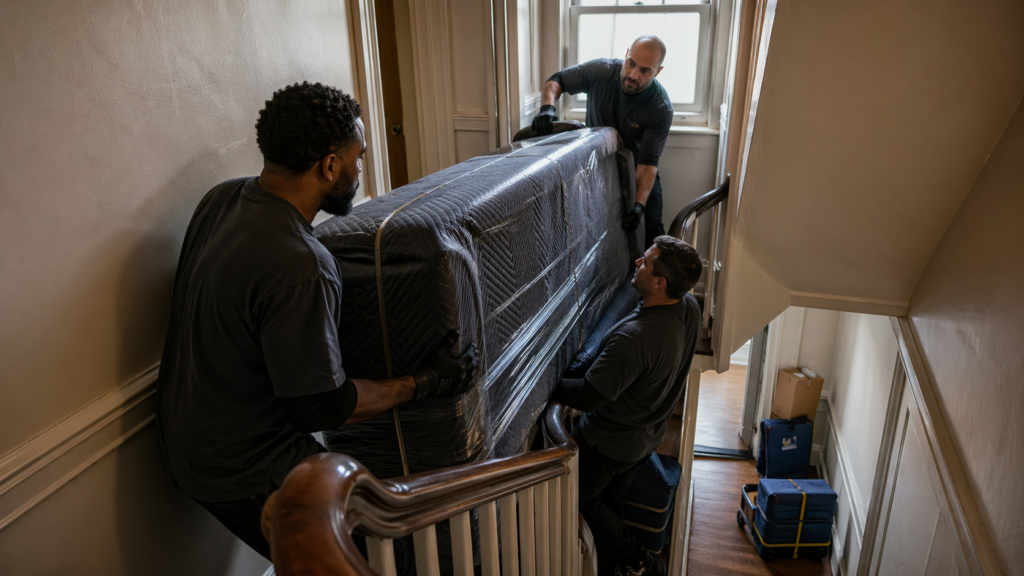
Hiring movers is usually the smarter choice when one or more of the following is true:
- Your building has stairs, especially multiple flights without an elevator
- You own heavy items like sleeper sofas, large dressers, washers, or refrigerators
- You are moving between Boston neighborhoods with known parking issues, like Beacon Hill, the North End, or parts of Cambridge
- You have a strict move-in window set by your building or condo association
- You do not have time to pack, wrap, drive, and unload on the same day
- You cannot realistically get three friends to commit to eight hours of hard labor
For smaller apartments, a targeted service like small move movers in Boston often hits the sweet spot between cost and risk.
When Hiring Movers Is the Obvious Call
A few situations are not really a judgment call. If any of these apply, the DIY math almost always gets worse, not better:
- Pianos, pool tables, or safes. These require specialized equipment and training. A single misstep can cost thousands.
- Antiques and heirlooms. Damage here is irreplaceable, not just expensive.
- Artwork, mirrors, and glass-top furniture. Blankets and straps only go so far without experience.
- Long-distance or interstate moves. Federal regulations (see the FMCSA Protect Your Move resource), weight-based pricing, and consumer protections make professional interstate moving the safer and often cheaper path.
- Tight deadlines. Last-minute moves, job relocations, or same-day closings rarely leave room for DIY logistics.
“After nearly two decades of moves across Greater Boston, we see the same pattern almost every week. The DIY jobs that go smoothly share three things: a small inventory, ground-floor access, and realistic expectations. When any one of those breaks, the cost difference between doing it yourself and hiring a crew closes fast, and sometimes flips entirely.”
— the lead crew at Continental Moving
Boston-Specific Factors That Change the Math
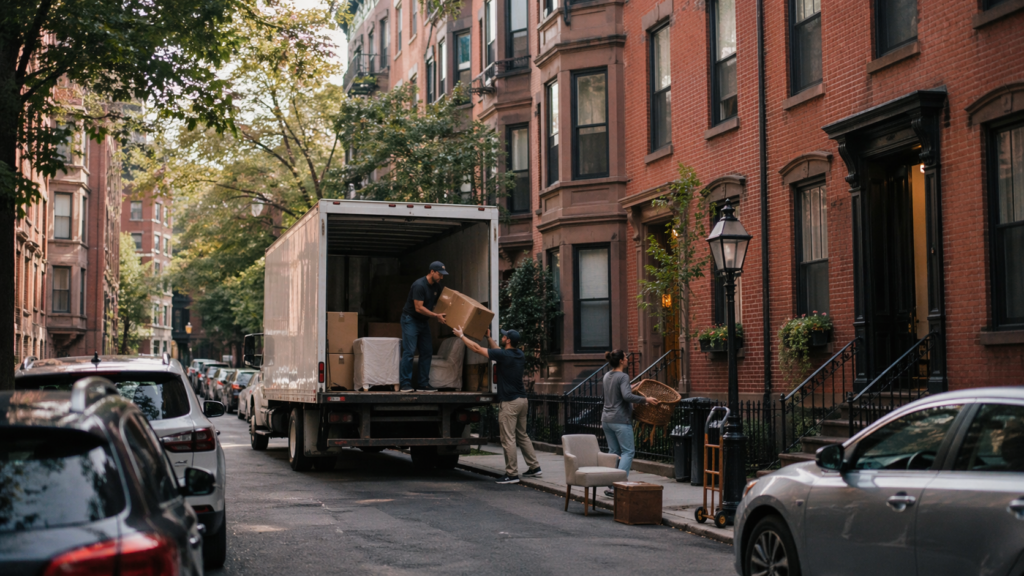
Boston moves come with wrinkles most online calculators ignore:
- Parking. Many streets require a moving permit from the city. Without one, finding legal parking for a rental truck during peak hours can add an hour to your day and risk a ticket. The City of Boston Transportation Department handles these permits.
- Narrow streets and no-truck roads. Storrow Drive is famous for peeling the roof off rental trucks that try it. Many side streets in Beacon Hill and the North End are not built for 15 or 20-foot trucks.
- Stairs. Walkup apartments, especially three and four-story walkups in Allston, Brighton, and Somerville, dramatically change how much time and physical work a move takes.
- September 1. Boston’s famous moving day means tripled demand, higher rates, and limited truck availability. If you have to move on or near September 1, pre-booked professional movers are almost always the safer call.
- Weather. Rain, snow, and ice make stairs and ramps slower and more dangerous, and make DIY moves longer and riskier.
Local crews who work these conditions daily, like those at Continental Moving, can turn a potential 10-hour DIY scramble into a clean 3-hour job.
Hidden Costs Most People Forget
A few line items consistently blow up DIY budgets:
- Lost security deposit from scratched floors, chipped door frames, or wall damage in your old unit
- Second trips when the rental truck is too small for your actual inventory
- Mattress bags and TV boxes that you did not know you needed until the item was already halfway loaded
- Late-return fees on the rental truck when loading takes longer than planned
- Parking tickets for stopping in the wrong spot
Any single one of these can add $100 to $400 to a supposedly cheap DIY move.
FAQs
Is it always cheaper to move yourself than hire movers?
No. For very small, simple moves, DIY is cheaper on paper. For anything involving stairs, heavy items, or tight deadlines, the gap closes and sometimes reverses. A Boston studio move often comes out within $100 to $200 either way once you count every DIY line item.
How long does a DIY move usually take?
For a studio, expect 6 to 8 hours including truck pickup, loading, driving, unloading, and return. A one-bedroom typically runs 8 to 10 hours. Professional movers cut that to 2 to 5 hours for the same apartments.
What do professional movers charge per hour in Boston?
Most local Boston movers charge between $100 and $180 per hour for a two or three-person crew, with larger crews at $180 to $250 per hour. Most companies require a 2 to 3 hour minimum, and some add travel time on top.
What does a U-Haul actually cost for a Boston move?
The $19.95 base rate rarely matches the final bill. Once you add mileage at $0.99 to $1.39 per mile, gas at 10 to 12 MPG, optional insurance, and supplies, most in-town Boston moves run $150 to $300 for the truck alone.
Do professional movers include insurance?
By federal rule, movers must offer basic released value protection for free. That covers about $0.60 per pound, which is minimal. For higher-value items, you can buy full-value protection from the mover or check your homeowner or renter insurance policy.
When should I book movers in Boston?
For most moves, 2 to 4 weeks ahead is enough. For end-of-month and especially September 1 moves, book 6 to 8 weeks out. Last-minute availability exists, but it comes with a premium.
Can I mix the two approaches?
Yes. One increasingly popular option is renting a truck or container yourself, then hiring labor-only help for the heavy lifting. This hybrid often beats both pure DIY and full-service on total cost when building access is easy.
Making the Call
There is no universally right answer to should I hire movers. The honest picture comes down to your specific situation:
- Small, simple, ground-floor move with reliable help: DIY is a fair option.
- Stairs, heavy items, tight schedule, or valuable inventory: professional movers almost always win on total cost once everything is counted.
- Somewhere in between: a hybrid approach, with a rental truck plus labor-only help, often beats both.
For a clearer picture of your own numbers, get a written estimate from a local crew and compare it directly to your DIY plan. The team at local movers in Boston, MA can provide a free, itemized quote so you can decide based on real numbers, not guesses.
