
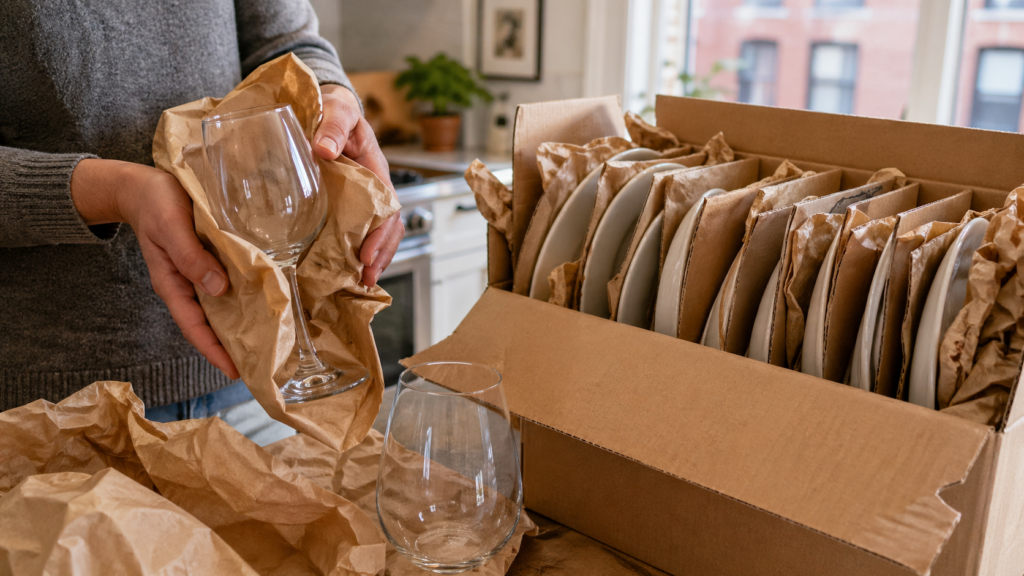
Moving into a new home is an exciting milestone, but packing the kitchen often causes the most stress. Plates, glasses, bowls, and mugs are among the most delicate items in any home, and even a small mistake can lead to costly damage during transit. Opening a box to find broken family heirlooms or shattered dinnerware is disappointing, but it is also largely avoidable. With the right preparation, proven packing methods and a kitchen packing guide, you can give your kitchen items the protection they need throughout the move.
Preparation is the foundation of successful packing. Many people leave the kitchen until the final day, which often leads to rushed decisions and poor packing techniques. Taking the time to organize materials in advance makes the process far more manageable and helps reduce the risk of damage.
Start by gathering the right supplies. Standard grocery store boxes are rarely strong enough to support heavy kitchenware. Instead, use sturdy double walled moving boxes designed for dishes and glassware. You will also need plenty of clean packing paper, quality packing tape, bubble wrap, and permanent markers for clear labeling.
Before placing anything inside a box, create a protective cushion across the bottom. Crumple several sheets of packing paper into tight balls and build a layer approximately three inches deep. This cushion absorbs the vibrations and impacts that naturally occur while the truck is traveling. Proven fragile item packing tips help eliminate guesswork and provide every item with a stronger level of protection before the box is even filled.
Master the Paper Wrapping Technique
The way you wrap each item is far more important than how tightly you seal the box. Never allow ceramic, porcelain, or glass surfaces to touch one another directly. Even small amounts of movement during transport can create chips or hairline cracks.
Lay a sheet of packing paper on a flat surface and place a single plate in the center. Fold each corner over the plate until it is completely enclosed. Repeat this process for every plate rather than wrapping several together.
Once individual plates are wrapped, group three or four together and wrap the entire bundle in another sheet of packing paper. This creates an additional layer of protection while helping the plates remain stable during transport.
When loading the box, place plates upright on their edges rather than stacking them flat. Plates are naturally stronger in this position and are better able to withstand pressure during the move. Flat stacks are much more likely to crack under weight.
Fragile Item Packing Tips: Protect Glasses and Stemware with Extra Care
Glassware requires a different packing approach because stems, rims, and handles are especially vulnerable. Begin by filling the inside of each glass with crumpled packing paper. This supports the structure from within and helps reduce the chance of collapse under pressure.
Next, lay the glass on packing paper and roll it carefully, folding the paper around the base and rim as you go. The entire piece should be fully protected before it goes into the box. Expensive crystal or delicate stemware benefits from an additional layer of bubble wrap around the stem before the final paper wrap is applied.
Always place glasses upright inside the box. Their sides are much stronger than their rims, making this the safest orientation during transport. Cardboard cell dividers also provide valuable separation, preventing glasses from striking one another when the truck moves over uneven roads or around corners.
A Kitchen Packing Guide Helps Avoid Common Packing Mistakes
Even perfectly wrapped dishes can break if the box itself is packed incorrectly. Overfilled boxes become difficult to carry safely, while underfilled boxes allow contents to shift during transport. A properly packed dish box should feel solid without being excessively heavy.
Before sealing the box, gently shake it. If you hear movement, fill any empty spaces with additional crumpled packing paper until everything fits securely. Eliminating movement inside the box is one of the simplest ways to reduce breakage.
Labeling also deserves careful attention. Mark every box clearly with the word “Fragile” on several sides and use arrows to indicate which way should remain upright. These simple markings help anyone handling the box understand that extra care is required.
A detailed kitchen packing guide also makes unpacking much easier. Clearly labeled boxes allow you to identify kitchen essentials quickly once you arrive in your new home.
Trust the Professional Moving Strategy
Packing an entire kitchen takes time, patience, and attention to detail. For busy families, the process can quickly become overwhelming, especially when balancing the many other responsibilities involved in a move.
Professional movers have the experience, equipment, and fragile item packing tips needed to pack delicate household items safely and efficiently. They understand how to protect fragile belongings, organize boxes correctly, and transport kitchenware with minimal risk.
At Continental Moving, we have spent years refining our approach to packing and transporting delicate household goods. Our team treats every item with the same care and attention we would give our own belongings.
If you would rather leave the packing to experienced professionals and enjoy greater peace of mind throughout your move, request a quote to learn more about our customized packing and moving services.
